What does it take to create lasting social impact?
Individuals, organizations, businesses, and communities throughout Africa and around the world are working to address some of our most pressing social and environmental challenges. From poverty, inequality, and unemployment to climate change, access to healthcare, education, and economic opportunity, countless initiatives are translating purpose into action.
Yet, despite significant investments, innovative ideas, committed change-makers, and years of development efforts, many of these challenges persist.
Why? Perhaps the answer lies not only in what we are doing, but also in how we understand the problems, how our institutions operate, how resources are allocated, how partnerships are structured, and how different actors work together. A program can deliver results without addressing the conditions that perpetuate a problem. An organization can achieve its objectives while the wider system remains unchanged. A business can meet its sustainability commitments without creating meaningful improvements for the people and communities affected by its operations.
These realities invite us to rethink how we define, pursue, and measure social impact.
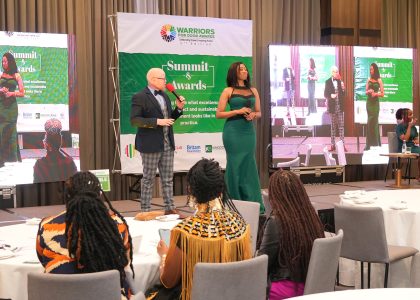
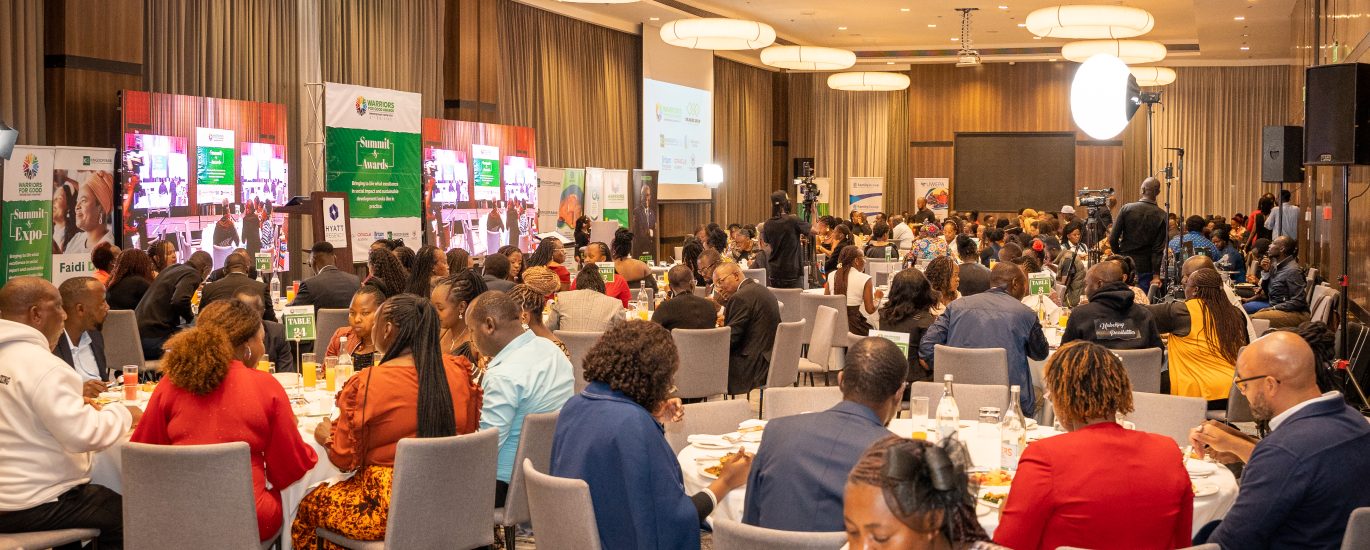
At Relinked Group, we believe that creating a better future requires connecting people, organizations, ideas, resources, and opportunities for collective action. This belief informs the Warriors for Good Series, a platform that brings together change-makers and purpose-driven actors to celebrate social impact, exchange knowledge, foster collaboration, showcase innovations, and explore solutions to shared challenges.
The third edition, themed “Reimagining the Future of Social Impact Through Systems Change,” challenges us to look at the bigger picture: the relationships, institutions, policies, incentives, financing mechanisms, and patterns of behavior that shape outcomes for people and the planet. It invites us to move from isolated interventions towards interconnected solutions, from fragmented efforts towards collective action, and from measuring activities alone towards understanding the changes our efforts produce and sustain.
As we embark on this journey, we invite individuals and organizations across the social impact ecosystem to reflect on six fundamental diagnostic questions.
Diagnostic Questions for Reimagining the Future of Social Impact Through Systems-Level Change
Reimagining the future of social impact requires us to recognize when systems are working, when they are failing, what needs to change, and where new possibilities are emerging. Just as a vehicle has warning lights that signal when something needs attention, our social impact ecosystems need mechanisms for reflection, learning, and course correction.
Yet, across the social impact landscape, we do not always recognize when our approaches are no longer serving the needs of the people and communities we seek to support. We may continue investing in programs that produce limited results, overlook structural barriers that perpetuate social challenges, miss opportunities for collaboration, or fail to adapt to changing realities.
How do we anticipate emerging challenges rather than react when they become crises? How do we determine what to sustain, what to change, what to stop, and what to build? How do we move from fragmented interventions towards coordinated action that addresses the root causes of social challenges? And how can we reimagine a future in which social impact is more sustainable, inclusive, collaborative, and capable of producing lasting change?
These questions call for a systematic approach to how we understand, design, fund, implement, and evaluate social impact initiatives. The following six diagnostic questions offer a practical framework for organizations, policymakers, development partners, social entrepreneurs, community leaders, and other ecosystem actors to reflect on their work and identify opportunities for systems-level change. They apply to individual programs, organizational strategies, partnerships, funding models, policies, and entire social impact ecosystems. Their purpose is not merely to improve existing interventions, but also to challenge assumptions, uncover systemic barriers, and identify the changes needed to achieve better outcomes for people and the planet.
1. What’s Working? Leverage It.
Every social impact ecosystem has strengths on which it can build. These may include effective community-led initiatives, trusted local institutions, innovative solutions, committed leadership, supportive policies, strong partnerships, or proven approaches that are delivering meaningful results. The challenge is to identify not only what is working, but also why it is working, for whom, and under what conditions.
Are communities actively participating in shaping the solutions that affect them? Are there organizations demonstrating effective and sustainable approaches to persistent social challenges? Are existing partnerships enabling actors to combine resources, expertise, and influence in ways that would be difficult to achieve independently? Are there policies, technologies, or financing mechanisms that can accelerate progress?
Understanding these strengths helps us identify what deserves to be sustained, replicated, adapted, or scaled. However, systems-level change requires us to look beyond individual success stories. An intervention may work well within one community but struggle to deliver similar results elsewhere because of differences in institutional capacity, incentives, resources, or local context. The task, therefore, is not simply to replicate successful initiatives, but to understand the conditions that make them successful and create an enabling environment for their wider adoption.
The diagnostic question: What is already working within our organizations, communities, partnerships, and wider systems that we can build upon to accelerate meaningful and lasting social impact?
2. What’s Not Working? Change It.
Good intentions do not automatically produce meaningful results. Programs may continue operating despite limited effectiveness, partnerships may exist without delivering collective value, and resources may be committed to interventions that address symptoms while leaving underlying causes untouched. Systems-level change requires the courage to confront these realities.
Which interventions are producing limited or unsustainable results? Where are organizations duplicating efforts? Which policies, institutional practices, or funding arrangements are reinforcing the very problems they seek to solve? Are communities experiencing meaningful improvements, or are we measuring success primarily through activities completed, people reached, and funds spent?
These questions challenge us to distinguish between activity and impact. Sometimes, the appropriate response is to improve an existing intervention. In other cases, it may be necessary to redesign a program, redirect resources, reconsider a partnership, challenge an institutional practice, or discontinue an approach that is no longer effective.
The objective is not to abandon initiatives whenever they encounter difficulties. It is to make evidence-informed decisions about what should change, recognizing that continuing ineffective approaches carries real costs for communities, organizations, and the wider development ecosystem. This also requires accountability. Organizations and funders must be willing to learn from failure, acknowledge unintended consequences, and adjust their strategies without losing sight of the people they serve.
The diagnostic question: Which interventions, institutional practices, policies, or patterns of collaboration are failing to deliver meaningful results, and what must we change or stop to achieve better outcomes?
3. What’s Unclear? Clarify It.
Social challenges are complex. Poverty, unemployment, inequality, climate change, poor health outcomes, and barriers to education rarely have a single cause or a straightforward solution. Some uncertainty is inevitable. However, much of the confusion within the social impact ecosystem arises from unclear objectives, competing priorities, fragmented information, weak coordination, and assumptions that have not been critically examined.
Organizations may use the same terminology while pursuing different objectives. Partners may agree that a problem exists but disagree on its root causes, the appropriate response, or how success should be measured. Communities may be consulted without having a clear understanding of how their contributions will influence decisions. These gaps can undermine trust, waste resources, and limit collective progress.
To reimagine social impact, we must clarify what problem we are trying to solve, why it persists, whose perspectives are shaping our understanding, and what changes are necessary to address it. This may involve conducting research, engaging affected communities, examining available evidence, mapping the relationships between different actors, or developing a shared understanding of the system in which an intervention operates.
It also means asking difficult questions. Are we addressing a root cause or merely managing a symptom? Are our assumptions supported by evidence? Do our partners share a common understanding of the intended outcomes? Are we clear about who holds decision-making power and who bears the consequences of our decisions? Where necessary, external perspectives can help challenge established thinking and reveal blind spots.
Clarity does not eliminate complexity. It enables us to navigate complexity with greater understanding, shared purpose, and informed judgment.
The diagnostic question: What do we not yet understand about the social challenges we seek to address, the systems that sustain them, and the changes required to produce meaningful results?
4. What’s Missing? Add It.
When social impact initiatives struggle, the instinctive response is often to do more with less, streamline operations, or launch another program. Yet the missing ingredient may not be another intervention. It may be a capability, relationship, resource, or structural condition that enables existing efforts to succeed.
A community initiative may need reliable financing rather than another short-term grant. A promising social enterprise may require access to markets, mentorship, or supportive regulation. A successful youth employment program may need stronger connections with employers and industry. Organizations working on the same challenge may need a shared platform for learning and coordination rather than separate, competing initiatives. Sometimes what is missing is community ownership, reliable data, institutional accountability, appropriate technology, local leadership, or the capacity to translate research into policy and practice.
At the systems level, we must also examine the relationships between these missing elements. Funding without coordination may reinforce fragmentation. Innovation without an enabling policy environment may struggle to scale. Community participation without decision-making power may remain symbolic. Evidence without mechanisms for adoption may have little influence on practice. Identifying these gaps helps us determine where additional investment can unlock progress across an entire ecosystem rather than produce isolated gains.
The goal is not to add complexity for its own sake. It is to identify the specific capabilities, connections, and enabling conditions that are necessary for sustainable change.
The diagnostic question: What capabilities, resources, relationships, institutional arrangements, or enabling conditions are missing from the system, and how can we put them in place to achieve greater collective impact?
5. What Are the Threats? Anticipate and Navigate Them.
Every effort to create social impact operates within a changing environment. Political transitions, economic pressures, climate-related shocks, technological disruption, shifting donor priorities, regulatory changes, and declining public trust can affect the effectiveness and sustainability of interventions. Other threats emerge from within the system itself: competition for limited resources, unequal power relations, weak accountability, fragmented leadership, exclusion of affected communities, or incentives that reward short-term results at the expense of long-term progress. Some threats are visible; others develop gradually until they become difficult and costly to address.
A systems-level perspective requires us to examine not only immediate risks to individual organizations or projects, but also the vulnerabilities and interdependencies that can affect the wider ecosystem. What happens if a major funding source withdraws? What if a policy change undermines an established intervention? What if several organizations depend on the same limited infrastructure or expertise? Could a technology intended to improve access deepen existing inequalities? Could a program create unintended harm or make communities dependent on external support?
These questions help us move from reactive crisis management towards anticipatory thinking and collective preparedness. Not every threat can be eliminated. However, many can be identified earlier, monitored more effectively, and addressed through contingency planning, diversified partnerships, stronger institutions, adaptive strategies, and shared accountability.
Organizations and ecosystem actors must also recognize that some risks are interconnected. A funding shock, for example, may weaken service delivery, reduce community trust, and place additional pressure on already overstretched public institutions. Anticipating these interactions is essential to building resilient systems capable of adapting to disruption without abandoning the people who depend on them.
The diagnostic question: What internal and external threats could undermine our progress, reinforce existing inequalities, or destabilize the wider social impact ecosystem, and how can we anticipate and navigate them collectively?
6. What Are the Opportunities? Seize and Build on Them.
Periods of change create opportunities to rethink established approaches and explore possibilities that were previously overlooked. Emerging technologies may enable more accessible services. New partnerships may connect organizations that have complementary expertise. Community-led innovations may offer more contextually appropriate solutions than conventional interventions. Policy reforms may create opportunities to address structural barriers, while new financing models may support initiatives that struggle under traditional funding arrangements. The key is to recognize opportunities not simply as openings for individual organizational growth, but as possibilities for improving the way the wider system functions.
Where are there unmet needs that existing institutions have overlooked? Which emerging innovations could help address the root causes of persistent challenges? Where could cross-sector collaboration unlock resources or capabilities that individual actors do not possess? Which community-led solutions deserve greater investment and influence? What policy, financing, or institutional changes could make effective interventions more sustainable?
The strongest opportunities often emerge at the intersection of what is already working and what remains possible. An organization with strong community relationships, for example, may be well positioned to partner with technology innovators and public institutions to improve service delivery. Several organizations addressing different aspects of the same challenge may be able to align their efforts around shared outcomes. Research findings may create an opportunity to influence policy, while a successful local initiative may reveal a pathway towards broader institutional change.
However, not every opportunity deserves investment. Decisions should consider evidence, feasibility, equity, long-term sustainability, community priorities, and the potential for systemic effects. The objective is to direct resources and collective effort towards opportunities that can generate value beyond isolated projects, strengthen relationships across the ecosystem, and contribute to lasting improvements in people’s lives.
The diagnostic question: What emerging opportunities, innovations, partnerships, or systemic shifts can we leverage to address root causes, unlock collective potential, and accelerate sustainable social impact?
From Diagnostic Questions to Systems-Level Change
These six questions provide a starting point for reimagining the future of social impact. Their value lies not only in the answers they generate, but also in the decisions they inspire, the assumptions they challenge, the relationships they strengthen, and the actions they help unlock.
- What’s working? — Leverage it. Identify strengths, effective practices, and existing assets that can be sustained, adapted, and expanded.
- What’s not working? — Change it. Challenge ineffective interventions, harmful practices, and structures that perpetuate social challenges.
- What’s unclear? — Clarify it. Build a shared understanding of root causes, system dynamics, intended outcomes, and evidence.
- What’s missing? — Add it. Address gaps in capabilities, resources, relationships, and enabling conditions.
- What are the threats? — Anticipate and navigate them. Identify risks, interconnected vulnerabilities, and emerging disruptions before they undermine progress.
- What are the opportunities? — Seize and build on them. Invest in promising innovations, strategic partnerships, and systemic shifts that can unlock collective impact.
To apply these questions effectively, organizations and ecosystem actors should move beyond reflection and translate their findings into concrete decisions. This means engaging the people most affected by social challenges, examining evidence, challenging assumptions, aligning priorities, assigning responsibilities, and establishing mechanisms to monitor progress and learn from experience.
Most importantly, systems-level change cannot be achieved by any single organization acting alone. It requires diverse actors to understand their roles within the wider system, recognize their interdependencies, and coordinate their efforts around shared outcomes.
The future of social impact depends not only on how many programs we implement, how many beneficiaries we reach, or how much funding we mobilize. It also depends on whether we are changing the conditions that allow social challenges to persist. As we reimagine the future of social impact, let us ask better questions, challenge established assumptions, strengthen what works, confront what does not, and build the relationships and conditions necessary for lasting change.
That is where the journey towards systems-level change begins.
From Reflection to Recognition and Collective Action
These six questions are not simply an organizational checklist. They are an invitation to examine the wider systems within which social impact happens.
For Relinked Group, the Warriors for Good Series represents an opportunity to bring these questions into conversations across sectors and disciplines. Through recognition, learning, innovation, collaboration, and action, we seek to strengthen the connections that enable social impact actors to learn from one another and work towards shared outcomes.
We believe that reimagining the future of social impact requires us to recognize and build upon what works, challenge approaches that limit progress, develop a shared understanding of the problems we seek to solve, connect the resources and capabilities needed for change, anticipate emerging risks, and identify opportunities for innovation and collective action. Most importantly, we must recognize that lasting change is rarely the achievement of one individual or organization. It emerges when different actors understand their interdependence, align their efforts, and take shared responsibility for the outcomes they seek to create.
This is the conversation the Warriors for Good Series seeks to advance.
Who Is Your Warrior for Good?
As we reflect on what it takes to create lasting change, we must also recognize the individuals and organizations already doing the work. Across communities, businesses, nonprofits, social enterprises, public institutions, and other sectors, people are challenging established approaches, developing innovative solutions, advancing sustainability, strengthening livelihoods, and addressing the root causes of social challenges. Their work deserves to be honored, celebrated, and recognized.
The Warriors for Good Awards, 3rd Edition (2027), is an opportunity to recognize these champions and celebrate their contributions to social impact. We invite you to participate in the ongoing nominations by identifying and nominating individuals and organizations whose work is turning purpose into progress across business, leadership, innovation, climate action, sustainable livelihoods, community development, and other areas of social impact.
Whether they are advancing education and healthcare, creating employment opportunities, empowering young people, championing responsible business and ESG practices, developing digital innovations, or strengthening community resilience, we want to hear their stories.
Who is your Warrior for Good?
- Nominate an individual or organization whose work is contributing to meaningful change.
- Share this opportunity with your networks and help recognize social impact champions.
- Encourage responsible businesses, sustainability leaders, social entrepreneurs, community initiatives, and organizations making a difference to participate.
- Submit your nomination: https://tinyurl.com/Warriors-for-Good-Awards
- Learn more about the Awards: https://www.relinkednetwork.com/warriors-for-good-awards/
As we reimagine the future of social impact through systems change, the question before us is not simply how we can do more good. It is how we can work together to create the conditions in which good can endure.
Join Relinked Group and the Warriors for Good community as we connect people, ideas, and solutions to shape a more sustainable, inclusive, and impactful future.
Warriors for Good Series, 3rd Edition
Reimagining the Future of Social Impact Through Systems Change.
Enhancing a Lifetime Commitment to Social Impact.